As currency pairs take center stage, this guide delves into the world of forex trading with a focus on major, minor, cross, and exotic pairs, offering insights into their significance and how they influence trading strategies.
Overview of Currency Pairs
Currency pairs are the foundation of the foreign exchange market (forex). In forex trading, currencies are always traded in pairs, where one currency is exchanged for another. The value of one currency is determined in relation to another currency in a pair.





Major currency pairs are the most traded pairs in the forex market and include combinations of the world’s most powerful currencies. These pairs typically involve the US Dollar (USD) paired with another major currency such as the Euro (EUR), Japanese Yen (JPY), British Pound (GBP), Swiss Franc (CHF), Canadian Dollar (CAD), or Australian Dollar (AUD).
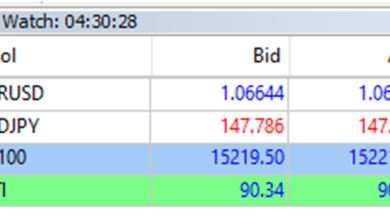
Currency pairs are quoted in the forex market with a bid price (the price at which traders can sell the base currency) and an ask price (the price at which traders can buy the base currency). The bid price is always lower than the ask price, creating a spread that represents the broker’s profit margin.
Examples of Major Currency Pairs
- Euro/US Dollar (EUR/USD)
- US Dollar/Japanese Yen (USD/JPY)
- British Pound/US Dollar (GBP/USD)
- US Dollar/Swiss Franc (USD/CHF)
- US Dollar/Canadian Dollar (USD/CAD)
- Australian Dollar/US Dollar (AUD/USD)
Significance of Currency Pairs in the Foreign Exchange Market
Currency pairs play a crucial role in the forex market as they reflect the relative strength of different economies. Traders analyze currency pairs to make informed decisions about when to buy or sell currencies based on economic indicators, geopolitical events, and market sentiment.
Understanding currency pairs and their dynamics is essential for forex traders to navigate the market successfully and capitalize on opportunities for profit. By monitoring currency pairs and staying informed about global economic developments, traders can make strategic decisions to maximize their trading performance.
Major vs. Minor Currency Pairs
When it comes to forex trading, currency pairs are categorized into major and minor pairs based on their trading volume and liquidity. Major currency pairs are the most traded pairs in the forex market, while minor pairs are less liquid and have lower trading volumes.
Major Currency Pairs
Major currency pairs consist of the most heavily traded currencies globally, including:
- Euro/US Dollar (EUR/USD)
- US Dollar/Japanese Yen (USD/JPY)
- British Pound/US Dollar (GBP/USD)
- Australian Dollar/US Dollar (AUD/USD)
These pairs are highly liquid, meaning there are a large number of buyers and sellers in the market, leading to tight bid-ask spreads. Major pairs are popular among traders due to their high liquidity, which allows for easier execution of trades and generally lower transaction costs.
Minor Currency Pairs
Minor currency pairs, also known as cross currency pairs, do not include the US Dollar on one side of the pair. Examples of minor pairs include:
- Euro/British Pound (EUR/GBP)
- Australian Dollar/Canadian Dollar (AUD/CAD)
- New Zealand Dollar/Japanese Yen (NZD/JPY)
Minor pairs have lower liquidity compared to major pairs, which can result in wider bid-ask spreads and potentially higher transaction costs. While they may not be as heavily traded as major pairs, minor pairs still offer opportunities for traders looking to diversify their portfolios and capitalize on specific currency movements.
Cross Currency Pairs
Cross currency pairs in forex trading refer to currency pairs that do not involve the US dollar (USD) as one of the currencies. Unlike major and minor currency pairs, which include the USD, cross currency pairs are directly exchanged between two major currencies.
Examples of Popular Cross Currency Pairs
Some examples of popular cross currency pairs include:
– EUR/JPY (Euro/Japanese Yen)
– GBP/AUD (British Pound/Australian Dollar)
– CAD/JPY (Canadian Dollar/Japanese Yen)
Importance of Cross Currency Pairs in Diversifying Forex Trading
Cross currency pairs play a crucial role in diversifying forex trading portfolios. By trading cross currency pairs, traders can take advantage of different economic conditions in various regions without the influence of the US dollar. This diversification can help spread risk and potentially increase trading opportunities in the forex market.
Base and Quote Currency
When trading in the forex market, currencies are always quoted in pairs. Each currency pair consists of a base currency and a quote currency. The base currency is the first currency listed in the pair, while the quote currency is the second currency listed.
Examples of Base and Quote Currency Combinations
- In the pair EUR/USD, the Euro (EUR) is the base currency and the US Dollar (USD) is the quote currency.
- For the pair USD/JPY, the US Dollar (USD) serves as the base currency, and the Japanese Yen (JPY) is the quote currency.
- In the pair GBP/AUD, the British Pound (GBP) is the base currency, and the Australian Dollar (AUD) is the quote currency.
Importance of Understanding Base and Quote Currencies in Forex Trading
Understanding the base and quote currencies in a currency pair is crucial for forex trading as it helps traders determine the value of one currency relative to another. The exchange rate of a currency pair indicates how much of the quote currency is needed to purchase one unit of the base currency.
Currency Pair Notation
Currency pairs are typically represented in the forex market by using a three-letter code to identify each currency involved. The first two letters represent the country, while the third letter represents the currency itself. For example, USD stands for United States Dollar, EUR for Euro, JPY for Japanese Yen, and so on.
The significance of the order of currencies in a pair is crucial for traders to understand. In a currency pair, the first currency listed is known as the base currency, while the second currency is called the quote currency. The value of the base currency is always equal to one unit, and the exchange rate shows how much of the quote currency is needed to purchase one unit of the base currency.
Impact on Trading Decisions
Understanding currency pair notation helps traders make informed decisions based on the relationship between the two currencies. For instance, if the EUR/USD pair is trading at 1.20, it means that 1 Euro can be exchanged for 1.20 US Dollars. If a trader believes that the Euro will strengthen against the Dollar, they may buy the pair, expecting to profit from the increase in value.
- Base Currency: The first currency in a pair, whose value is always equal to one unit.
- Quote Currency: The second currency in a pair, representing the value needed to purchase one unit of the base currency.
- Exchange Rate: Indicates how much of the quote currency is required to buy one unit of the base currency.
Currency Pair Correlations
Currency pair correlations refer to the relationship between the movements of two different currency pairs. Understanding these correlations is crucial in forex trading as they can impact trading strategies and risk management decisions.
Positive correlations indicate that two currency pairs tend to move in the same direction. This means that if one pair strengthens, the other pair is likely to strengthen as well. Conversely, negative correlations suggest that the pairs move in opposite directions. This means that if one pair strengthens, the other pair is likely to weaken.
Examples of Currency Pair Correlations
- Positive Correlation: EUR/USD and GBP/USD
- Positive Correlation: USD/JPY and Nikkei 225 Index
- Negative Correlation: USD/JPY and Gold (XAU/USD)
- Negative Correlation: USD/CAD and Crude Oil (WTI)
Exotic Currency Pairs
Exotic currency pairs are those that include one major currency and one currency from a developing or emerging market. These pairs are less liquid and have wider spreads compared to major and minor currency pairs.
Characteristics of Exotic Currency Pairs
- Exotic currency pairs are less traded and therefore have lower liquidity.
- They are more volatile compared to major and minor currency pairs.
- Wider spreads make trading exotic pairs more costly.
- Exotic currency pairs are often tied to economies with higher political and economic risks.
Risks and Rewards of Trading Exotic Pairs
- Risk: Due to lower liquidity, there is a higher risk of slippage and increased volatility.
- Reward: Higher volatility can lead to greater profit potential for traders who can accurately predict market movements.
- Risk: Political instability or economic crises in developing countries can significantly impact exotic currency pairs.
- Reward: Diversification benefits for traders looking to expand their portfolio beyond major pairs.
Examples of Exotic Currency Pairs and Trading Volumes
Some examples of exotic currency pairs include:
| Exotic Currency Pair | Trading Volume |
|---|---|
| USD/TRY (US Dollar/Turkish Lira) | High |
| EUR/TRY (Euro/Turkish Lira) | Low |
| USD/SEK (US Dollar/Swedish Krona) | Medium |
Factors Influencing Currency Pair Movements
Currency pair movements are influenced by a variety of factors that can impact the strength and direction of a currency’s value relative to another. Understanding these key factors is essential for traders to make informed decisions in the forex market.
Economic Indicators:
Economic indicators such as GDP growth, inflation rates, employment data, and interest rates play a significant role in currency pair movements. Positive economic data can strengthen a country’s currency, while negative data can lead to depreciation. Traders closely monitor these indicators to gauge the health of an economy and predict potential currency movements.
Geopolitical Events:
Geopolitical events, such as elections, wars, trade agreements, and geopolitical tensions, can have a substantial impact on currency pairs. Uncertainty and instability in a region can lead to volatility in the forex market, causing currencies to fluctuate rapidly. Traders need to stay informed about global events and how they may influence currency values.
Central Bank Policies:
Central banks play a crucial role in shaping currency values through their monetary policies. Decisions on interest rates, quantitative easing, and other policy tools can impact a currency’s strength and attractiveness to investors. Traders pay close attention to central bank announcements and statements to anticipate potential changes in currency pairs.
Analyzing Factors for Informed Trading:
To make informed trading decisions, traders need to analyze and interpret these factors effectively. Fundamental analysis involves studying economic data and news events to understand the underlying drivers of currency movements. Technical analysis uses charts and indicators to identify trends and patterns in price movements. By combining both approaches, traders can develop a comprehensive understanding of the market and make more accurate predictions.
Overall, staying informed about economic indicators, geopolitical events, and central bank policies is crucial for traders looking to navigate the complexities of the forex market and capitalize on currency pair movements.
Trading Strategies for Currency Pairs
When it comes to trading currency pairs, there are various strategies that traders use to make informed decisions and maximize profits. These strategies often involve a combination of technical and fundamental analysis to predict price movements and identify trading opportunities.
Common Trading Strategies
- Day Trading: This strategy involves opening and closing positions within the same trading day to take advantage of short-term price movements.
- Swing Trading: Traders using this strategy aim to capture medium-term trends in the market by holding positions for several days to weeks.
- Carry Trade: Involves borrowing in a low-interest-rate currency and investing in a higher-yielding currency to profit from the interest rate differential.
Importance of Technical and Fundamental Analysis
Technical analysis focuses on historical price data and chart patterns to predict future price movements, while fundamental analysis looks at economic indicators, geopolitical events, and market sentiment to evaluate the intrinsic value of a currency.
Short-Term and Long-Term Trading Strategies
- Short-Term: Scalping is a short-term strategy where traders aim to make small profits by entering and exiting trades quickly based on small price movements.
- Long-Term: Position trading involves holding trades for weeks to months based on long-term trends and fundamental factors.
Currency Pair Volatility
When we talk about currency pair volatility, we are referring to the degree of uncertainty or variation in the exchange rate of a particular currency pair over a certain period of time. Volatility is a key factor that traders consider when making decisions in the forex market, as it can greatly impact trading strategies and risk management.
Impact of Volatility on Trading Decisions and Risk Management
Volatility plays a crucial role in determining the potential risks and rewards of trading a particular currency pair. Higher volatility often means greater profit potential but also higher risk. Traders may adjust their position sizes, stop-loss orders, and overall trading approach based on the level of volatility in the market.
- High-Volatility Currency Pairs: Examples of currency pairs known for their high volatility include GBP/JPY, USD/ZAR, and EUR/TRY. These pairs can experience significant price swings in a short period of time, presenting both opportunities and risks for traders.
- Low-Volatility Currency Pairs: On the other hand, currency pairs like EUR/USD, USD/JPY, and GBP/USD are considered to have lower volatility. While these pairs may offer more stability, they may also have limited profit potential compared to high-volatility pairs.
Currency Pair Spread
The bid-ask spread is a key concept in the forex market that refers to the difference between the buying price (bid) and the selling price (ask) of a currency pair. This spread represents the cost of trading and is how brokers make money in the forex market.
Varying Spreads
Spreads can vary between different currency pairs based on factors such as liquidity, trading volume, and market conditions. Major currency pairs like EUR/USD or USD/JPY usually have tighter spreads due to high liquidity and trading activity. On the other hand, exotic currency pairs may have wider spreads because of lower trading volume and higher volatility.
- Major Currency Pairs: Tighter spreads due to high liquidity.
- Minor Currency Pairs: Slightly wider spreads compared to majors.
- Exotic Currency Pairs: Wider spreads due to lower liquidity and higher volatility.
It’s important for traders to consider the spread when executing trades, as wider spreads can increase trading costs and impact profitability.
Final Wrap-Up
From unraveling the complexities of base and quote currencies to exploring the impact of economic indicators on currency pair movements, this guide equips traders with the knowledge needed to navigate the dynamic forex market successfully.

Hi, I’m Lauren. As a digital enthusiast and storyteller, I love breaking down complex ideas into easy-to-read articles. My goal is to provide readers with fresh perspectives and helpful solutions through every piece I write.